
Sodium-ion vs LFP battery: if you’re buying grid storage in late 2026, LFP (lithium iron phosphate) is still the cheaper, denser and far better proven choice. Sodium-ion is the newcomer, and it has real strengths in heat, cooling load and raw-material supply. CATL, the market leader, launched its TENER Sodium storage system in June 2026, scheduled first deliveries in China for September, and plans to ship internationally from mid-2027.
In a September 2026 Chinese tender, the sodium-ion package was the leading bid at roughly twice the price of the LFP package. This guide works from CATL’s own numbers to show where sodium-ion stands, what it does better, where it falls short, and what to ask a supplier before you commit.
- Where sodium-ion wins: lower cell heat, a smaller cooling load and less noise, more margin if thermal management fails, and no dependence on lithium.
- Where LFP wins: price, energy density per container, field history, and bankability today.
- The open questions: how the cells behave when charged in the cold, how fast they age at rest, and whether the 10,000 to 15,000 cycle claims hold up in the field.
Sodium-Ion vs LFP Battery: How the Two Chemistries Differ
Both chemistries work the same way: positive ions shuttle between two electrodes as the cell charges and discharges. In an LFP cell the ion is lithium. In a sodium-ion cell it’s sodium. That one swap explains most of what follows. Sodium is abundant and spread across the globe. Lithium mining and refining sit in a handful of countries, with Australia, Chile, Argentina and China at the center of the supply chain.
So sodium-ion cuts dependence on lithium and, depending on the cathode, on other critical materials too. Don’t oversell it, though. Some sodium-ion cathodes still use nickel and manganese, and hard-carbon production has supply-chain questions of its own. CATL makes the same point in its own presentation: lithium resources are highly concentrated, and sodium resources aren’t.
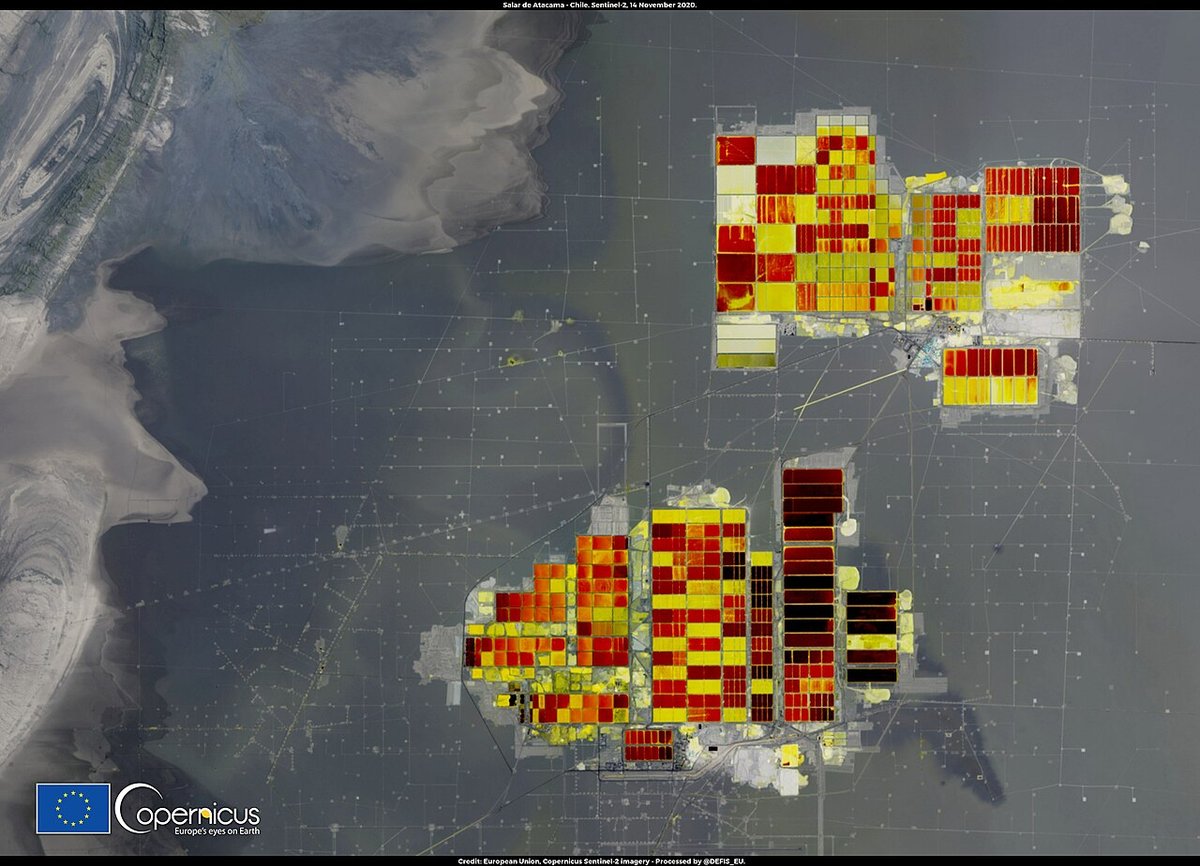
Image: Contains modified Copernicus Sentinel data (2020), European Union, via Wikimedia Commons. Lithium evaporation ponds at Salar de Atacama, Chile.
Why Sodium-Ion Cells Need a Different Anode
Standard lithium-ion cells use a graphite anode. Graphite stores about 372 mAh/g of lithium but less than 35 mAh/g of sodium, because sodium just doesn’t bind to it well enough. So sodium-ion cells use hard carbon instead, a disordered carbon that holds sodium through adsorption, insertion between carbon layers and filling of tiny pores, depending on its structure. Keep this one in mind. Hard carbon charges at a potential close to the point where sodium metal starts to plate out, and that matters later in this article.
A Lower Cell Voltage Costs Energy
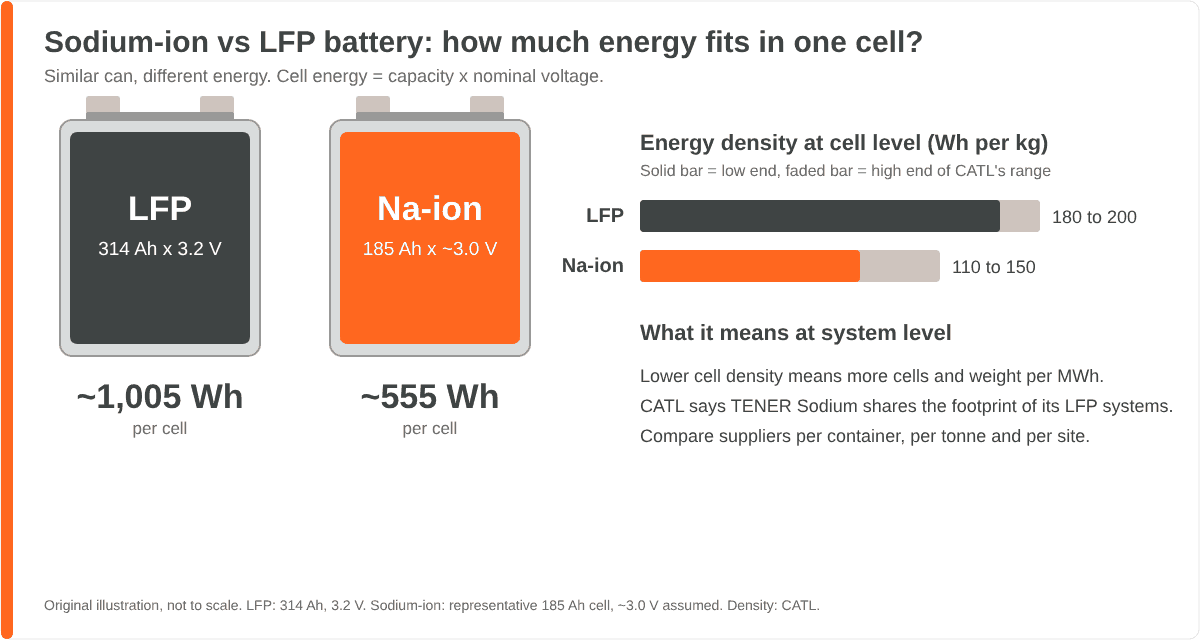
Sodium sits about 0.33 V above lithium on the electrochemical scale. A lower cell voltage means less energy per cell, so sodium-ion generally has a lower energy-density ceiling than comparable LFP designs. Better electrode materials and cell engineering keep narrowing the gap, and voltage is only one factor, since electrode capacity and operating window matter too. CATL’s own comparison puts LFP at 180 to 200 Wh/kg and sodium-ion at 110 to 150 Wh/kg at cell level. Read that as a representative range for storage-oriented cells, not a limit of the chemistry.
Three Cathode Families, and Which One Storage Uses
Sodium-ion cathodes come in three families. Layered oxides are the densest, but they’re sensitive to moist air. Prussian white is cheap, but moisture-sensitive during material processing and storage. Polyanion materials such as sodium iron pyrophosphate phosphate (NFPP) trade energy for long life and stability. CATL’s Naxtra passenger-vehicle cell reaches up to 175 Wh/kg. CATL hasn’t disclosed the chemistry inside TENER Sodium, although Energy-Storage.news notes that NFPP is the most common choice for storage. If it is a polyanion cell, expect the lower end of the density range.
What Large LFP and Sodium-Ion Cells Look Like Side by Side
Side by side, the two look alike: a prismatic aluminum can with two terminals and a vent on top. Modern LFP storage cells in this format hold roughly 280 to 314 Ah and measure about 207 x 72 x 174 mm. Sodium-ion storage cells are expected to use similar cans, but capacity and dimensions vary by manufacturer, and CATL hasn’t published its storage-cell format. So the infographic below shows a representative LFP cell and a representative sodium-ion cell, not CATL’s own storage cells. We link to press coverage instead of reusing photos, because manufacturer images are copyrighted. For the real hardware, see the cell and system images in coverage of CATL’s TENER Sodium launch and in Energy-Storage.news’ look inside the container.
Where Sodium-Ion Stands Today: CATL’s Timeline
According to CATL’s TENER Sodium announcement, the company has put nearly EUR 1.2 billion (about RMB 10 billion) into sodium-ion R&D since 2016 and has more than 300 R&D professionals. It’s also putting RMB 5 billion into new sodium-ion lines at Fuding (40 GWh a year) and plans 160 GWh at Jining. The timeline below shows how fast the technology has moved from lab to product.
| Date | Milestone | What it means |
|---|---|---|
| 2016 | CATL starts sodium-ion R&D | A decade of development before volume production. |
| July 2021 | First-generation sodium-ion cell launched | Proof of concept, followed by integration into Chery EVs in December 2023. |
| 21 April 2025 | Naxtra brand launched | Up to 175 Wh/kg and a claimed 10,000+ cycles for vehicles. |
| 5 September 2025 | Naxtra passes GB 38031-2025 | First sodium-ion battery certified to China’s new EV battery safety standard. It is an automotive standard, not a stationary storage standard. |
| 22 June 2026 | TENER Sodium storage system unveiled in Munich, Germany | Modular units of more than 30 MWh, about 42 t each, according to CATL. |
| September 2026 | Initial deliveries to Chinese customers scheduled by CATL | Target of 1 GWh in cumulative shipments by the end of 2026. Confirmed volumes have not been independently verified. |
| June 2027 | International deliveries begin | Outside China, there is no field data yet. |
Sodium-ion storage isn’t just theory, either. A first 50 MW / 100 MWh phase of a sodium-ion project in Qianjiang, Hubei is already running on 185 Ah cells from HiNa Battery, with plans to double it to 200 MWh, according to Energy-Storage.news. That’s a useful first data point. It’s still one project, and a different supplier from CATL.
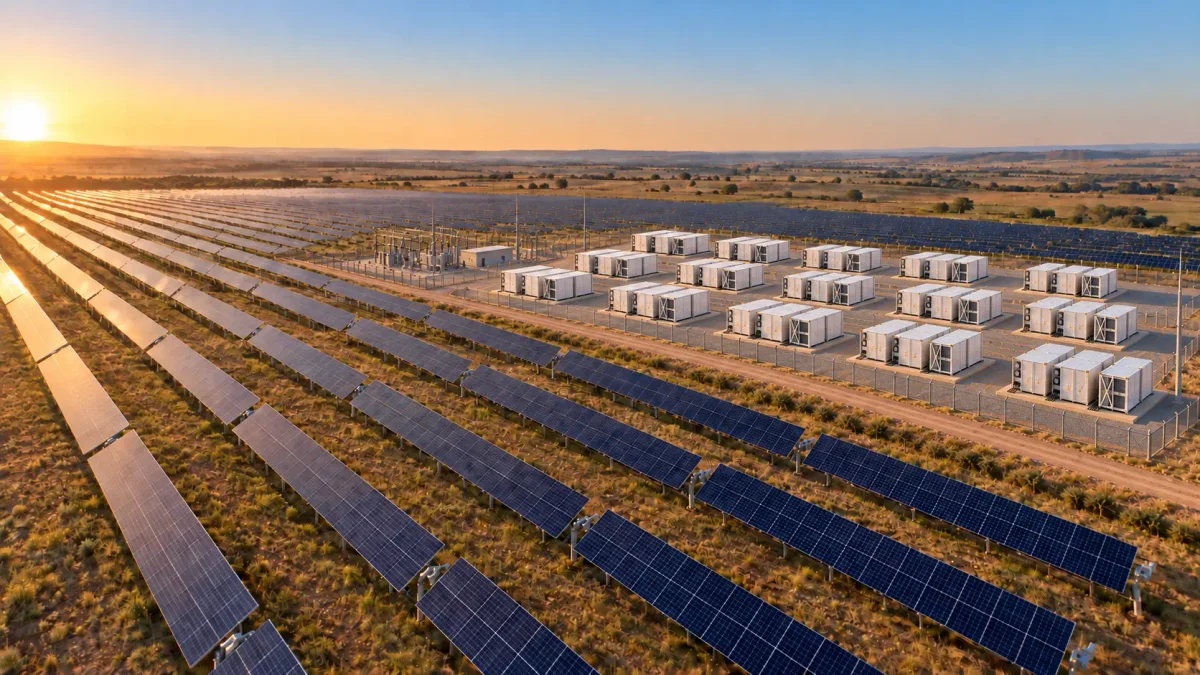
Symtech Solar MEGATRON MV Power Block: containerized LFP storage, the incumbent chemistry in utility-scale projects today.
TENER Sodium Specifications (CATL Figures)
| Item | CATL figure | Note |
|---|---|---|
| Modular unit | More than 30 MWh per unit (about 34 units per GWh) | CATL’s announcement. Some press reports describe 3.75 MWh cabinets, so confirm what one unit contains before comparing density. |
| Module weight | About 42 t each (CATL) | Over-dimension, heavy-lift shipping. |
| Cycle life | 15,000 cycles at 25°C; over 10,000 at 45°C | To 70% state of health (SOH), not 80%. |
| Design life | 20 to 30 years, a manufacturer and press target that varies by source and duty | One cycle per day gives about 7,300 cycles in 20 years. |
| Cold discharge | Over 92% of capacity at -20°C | Cell-level, discharge only. Thermal management normally keeps operating temperature well above this. No cold-charging limit was published in the sources reviewed. |
| Round-trip efficiency | About 95% at 25°C, 0.25P | DC-side figure. AC-to-AC at the grid connection will be lower. |
| Noise | 65 dB(A) or less | Measuring distance not stated. |
Sodium-Ion vs LFP Battery: Side-by-Side Comparison
The table below sets CATL’s published figures next to the one public price comparison available. Treat every performance figure as a manufacturer claim until independent field data exists.
| Parameter | LFP | Sodium-ion | Comment |
|---|---|---|---|
| Cell energy density | 180 to 200 Wh/kg 400 to 450 Wh/L | 110 to 150 Wh/kg 190 to 220 Wh/L | CATL figures. Sodium needs more cabinets per MWh. |
| Cell discharge at -20°C (0.25P) | About 60% | 92% or more | CATL figures. One commercial LFP datasheet specifies at least 70%. Managed systems rarely run this cold, so the benefit is margin, and any heater-energy saving needs system-level testing. |
| Cycle life at 45°C | 8,000 or more | 10,000 or more | CATL’s sodium curve is measured to about 2,000 cycles, then extrapolated. |
| Cell heat generation | Baseline | 27% lower at start of life, 33% lower at end of life | Versus CATL’s EnerX LFP product. |
| Leading bid, Sept 2026 tender | RMB 0.518 per Wh (about $76/kWh, 360 MWh package) | RMB 1.035 per Wh (about $152/kWh, 40 MWh package) | About 2 times. Lot sizes differ, so it is a market signal, not a pure chemistry cost. |
| Field history in storage | Many years across hundreds of GWh | CATL scheduled first deliveries for September 2026 | The biggest gap for lenders and insurers. |
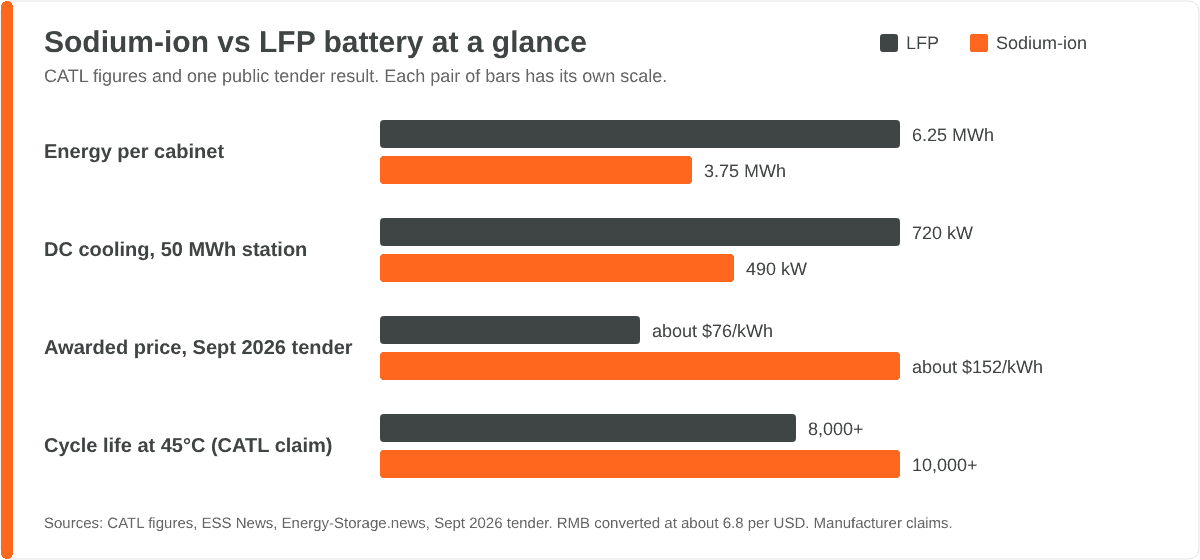
The chart below puts the sodium-ion vs LFP headline numbers on one scale per row.
Sodium-Ion vs LFP Advantages: What Does Sodium-Ion Do Better?
Better Cold-Weather Margin and Possibly Less Heating Energy
Cold-weather discharge is a real cell-level advantage, but a smaller one in operation than it sounds. Before an ion can enter an electrode, it has to shed the shell of solvent molecules around it, and that step slows sharply as temperature drops. Sodium ions hold their shell more loosely than lithium ions, so the step costs less energy. CATL reports over 92% of capacity at -20°C against about 60% for LFP. The size of the gap is a manufacturer claim, but the direction matches the physics. In practice, though, a BESS never sits at -20°C. Heating and cooling hold the cells in a narrow band. So the likely payoffs are lower heating demand, more margin if a heater or the power fails, and an easier job at sites where holding temperature is costly. Actual auxiliary-energy savings need system-level testing.
Lower Heat and a Smaller Cooling Load
CATL reports 27% lower cell heat generation at start of life and 33% lower at end of life than its own EnerX LFP system. Those are product-versus-product numbers under CATL’s test conditions, so don’t read them as a universal chemistry result. For a 50 MWh station, CATL quotes 490 kW of DC cooling capacity against 720 kW, a 32% cut, and 65 dB(A) of noise against 75. Less heat means smaller chillers, fewer fans and a quieter site, which helps with permitting near homes. Our guide to liquid-cooled battery energy storage systems shows how cooling shapes system design.
Thermal Behavior That Looks Favorable
In differential scanning calorimetry tests on a charged anode with electrolyte, CATL shows about 50% less total heat release for sodium-ion than for LFP. It also reports a thermal runaway surface temperature of about 200°C for its sodium-ion cell, which it presents as lower than its lithium-ion comparison. Keep that in perspective. It’s a manufacturer-reported test result, it isn’t the temperature at which runaway begins, and it doesn’t remove runaway risk. These are material-level and cell-level tests, and they don’t replace a large-scale fire test of the full system. Read them alongside our explainer on BESS fire safety, thermal runaway, NFPA 855 and UL 9540A.
No Dependence on Lithium
CATL executives say sodium carbonate costs about 1% as much as lithium carbonate. That’s a raw-material price, not a cell price. It’s a real advantage, and it removes exposure to lithium price spikes. But it doesn’t make a cell 99% cheaper, because the hard-carbon anode, cathode processing and lower density all add cost. Hard-carbon supply is a constraint worth watching too.
A Voltage Curve That Makes State of Charge Easier to Read
LFP’s voltage is almost flat across most of its charge, so estimating state of charge from voltage alone is hard. In many sodium-ion cells the voltage slopes steadily with charge, depending on the cathode, which gives the battery management system a cleaner signal. Our overview of battery management systems explains why that matters.
Sodium-Ion vs LFP Disadvantages: Where Does Sodium-Ion Fall Short?
Sodium-Ion vs LFP Price: About Twice as Much in the Only Public Tender
In a September 2026 tender for a 100 MW / 400 MWh storage project in Renqiu, Hebei, CATL’s sodium-ion package (10 MW / 40 MWh) was listed as the leading bid at about RMB 1.035 per Wh (about $152 per kWh at RMB 6.8 per USD). The LFP package (90 MW / 360 MWh) was the leading bid at about RMB 0.518 per Wh (about $76 per kWh), from Envision Energy. The sodium-ion lot was nine times smaller, so scale is part of the story, and CATL expects costs to fall as production grows. Today, though, buyers should expect a premium.
Lower Cell Density Means More Cells and Weight per MWh
CATL says TENER Sodium is compatible with its LFP systems and shares the same physical footprint, with 34 modules of about 42 t covering 1 GWh. Press reports describe 3.75 MWh cabinets inside them. Lower cell density means more cells and more weight per MWh, but how much extra land or equipment that adds depends on system design. Some current high-capacity 20-foot LFP configurations offer about 6.25 MWh, so ask each supplier for energy per container, per tonne and per square meter of the whole site, measured on the same boundary. Access, fire separation and inverter layout all affect the footprint. CATL’s “247 kWh per square meter” figure assumes cabinets packed edge to edge. Add access aisles, inverter skids and fire-code spacing, and real site density drops a lot. On the factory side, a 2025 Volta Foundation analysis estimates that a line making 10 GWh a year of LFP cells makes about 4.8 GWh of polyanion sodium-ion cells. For project planning, see our overview of containerized battery energy storage systems.
Cold Charging Is the Unanswered Question
Utility systems heat and cool to hold cells in a narrow window. So the practical questions are how much heater energy a chemistry needs, and what happens if a heater or the power fails. Discharging in the cold and charging in the cold are different problems. Hard carbon stores sodium only about 0.1 V away from the potential where sodium metal plates out, and cold, fast charging pushes it past that line. A 2026 peer-reviewed study by researchers at Arizona State University and the University of Michigan tested commercial sodium-ion 18650 cells. At -20°C they took in far more charge than they gave back, with a charge-to-discharge ratio of about 3.4 on the first cycle for one cell type, against 1.10 for a lithium-ion reference. The authors attribute that mainly to sodium metal deposition (Marikundama et al., 2026). Those were small, first-generation layered-oxide cells, not storage-grade cells with heating and liquid cooling. Even so, they show why “works at -40°C” is a discharge claim, and why you should ask a supplier for its charge-current limits at low temperature. Don’t generalize the results to every sodium-ion chemistry or to modern stationary-storage cells. They point to a possible degradation mechanism that needs more investigation.
Ageing at Rest Is Less Proven Than Cycling
Research reports that the protective film (SEI) on sodium-ion electrodes dissolves more readily in common electrolytes than lithium’s does, and faster when warm. Published studies of commercial cells report measurable sodium loss during storage, so the effect is real, although results vary by cell and conditions. A storage system spends much of its life resting, so calendar-ageing data matters as much as cycle data.
The Cycle-Life Claims Are Mostly Projections
CATL’s 45°C cycle-life chart shows measured data to about 2,000 cycles, then a dashed straight line out to 10,000. The LFP comparison line is extrapolated from about 500 cycles, and modern LFP storage cells are rated well above the figure it implies. A straight-line projection also assumes no late-life “knee” where capacity starts falling faster. And CATL rates life to 70% state of health, while many LFP warranties use 80%. So the 8,000 and 10,000 cycle figures in the comparison aren’t a like-for-like service-life comparison. Test conditions, operating windows and end-of-life thresholds can all differ.
An Unpublished Voltage Window and Thin Certification Detail
Voltage windows are specific to each chemistry and product, and CATL hasn’t published a numeric range for TENER Sodium. Its design uses bidirectional DC conversion (Bi-DC) to hold the PCS output at 690 V, and CATL says that improves round-trip efficiency by around 2%. But the added conversion stage is one more component to qualify. On certification, the GB 38031-2025 result applies to the EV cell. For storage, ask for the actual certificates, not logos.
Sodium-Ion vs LFP: When Does Sodium-Ion Make Sense, and Where Does LFP Still Win?
An independent 20-year model by battery researcher Dr. Juho Heiska (Akkutohtori) uses the tender prices and CATL’s claimed cycle lives to compare capex per MWh stored. At one cycle per day, sodium-ion costs about twice as much per MWh stored as 12,000-cycle LFP. At two cycles per day, sodium-ion rated at 15,000 cycles beats a 6,000-cycle LFP product, but it still costs about 1.6 times a 12,000-cycle one. Sodium-ion breaks even with 12,000-cycle LFP only if its price falls to about 1.2 times LFP’s. The tender gap was 2.0 times.
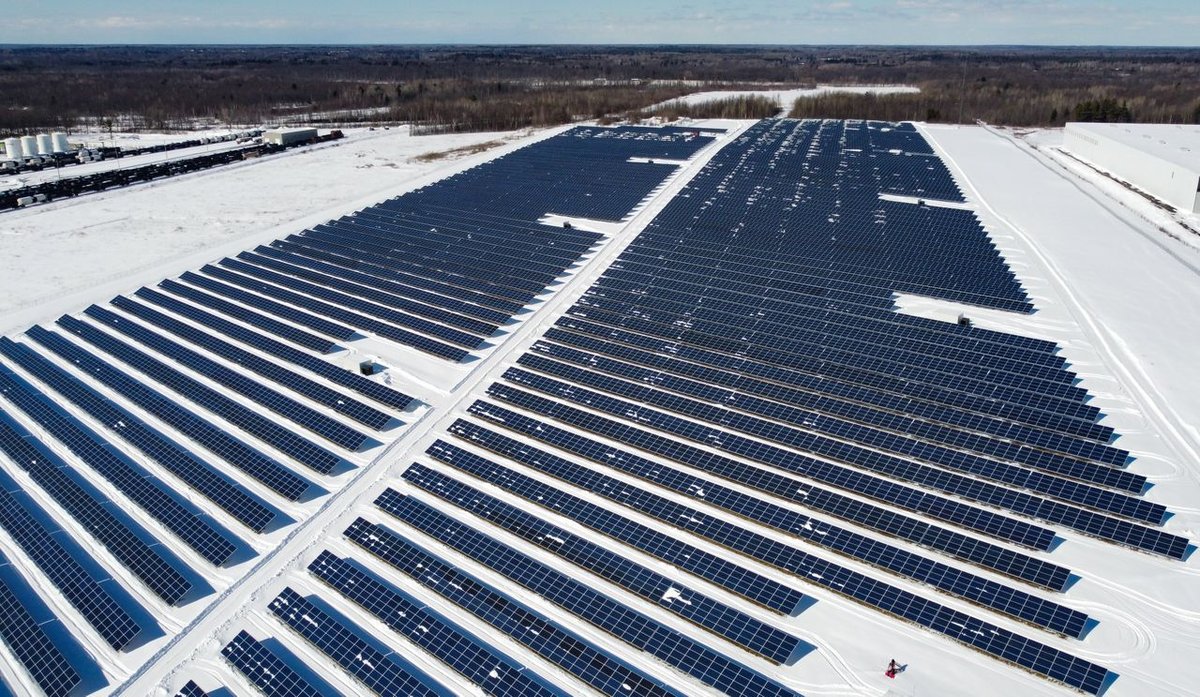
Photo: Braeson Holland via Pexels. A solar farm in Kingston, Canada, the kind of cold-climate site where sodium-ion’s lower heating load and cold-weather margin could matter.
- Winter heating energy matters and sites sit well below freezing, provided the charging window and heater requirements are confirmed in writing.
- The duty is heavy, near two full cycles a day, and the price premium shrinks toward 1.2 times.
- Thermal behavior and low noise are top priorities, for example near buildings.
- Buyers want a supply chain that does not depend on lithium.
- The duty is about one cycle per day, which describes most solar shifting and peak shaving.
- Land, shipping weight or container count are tight constraints.
- Lenders, insurers or utilities require a multi-year field track record.
- The project is price-sensitive, which most are.
For wider context on how chemistries are shifting across the industry, see our review of the global BESS market in 2026, and our explainer on 280Ah lithium-ion cells, the LFP format that sodium-ion has to beat.
Sodium-Ion vs LFP in North America: What Is Coming Next?
Most sodium-ion storage today is in China. In North America, it’s a handful of pilots and a wave of announced factories and supply deals. The table below separates what has happened from what’s only planned. Anything marked as our estimate is a judgment from the announced schedules, not a forecast from a source.
| Timing | What is expected | Status |
|---|---|---|
| 2025 to 2026 | Peak Energy’s 3.5 MWh pilot at SolarTAC in Watkins, Colorado, plus early utility-side pilots such as the RWE Americas project in the MISO region. | Pilot running (reports differ on the RWE project’s size and date) |
| Q1 2027 | Peak Energy’s Sacramento, California plant (about $71 million, up to 4 GWh a year) targets first production and shipments. Reporting describes it as a system assembly plant using cells made to Peak’s specification by Chinese suppliers. | Planned |
| 2027 | UNIGRID and Syntropic Power target about 1 GWh of sodium chromium oxide (NCO) storage deployments, and US cell manufacturing by the end of the year. CATL’s international deliveries are also scheduled to begin in June 2027. | Planned |
| 2027 to 2030 | Multi-GWh customer commitments to Peak, including an agreement with Jupiter Power (reported figures vary) and more than 6 GWh of commitments in total. | Commitments, not delivered orders |
| 2028 to 2030 | Our estimate: first utility-scale North American projects with a year or more of operating data, which lenders and insurers will want to see before sodium-ion moves beyond niche duty. | Our estimate |
| 2030 to 2035 | Wood Mackenzie expects this period to decide sodium-ion’s economic competitiveness, with system-level cost parity with LFP not expected before 2030. | Analyst forecast |
Will Sodium-Ion Reach Cost Parity With LFP?
Wood Mackenzie puts today’s average cell cost at about $229/kWh for sodium-ion against about $200/kWh for LFP. It expects leading manufacturers to hit cell-level parity by late 2026, but module- and system-level parity only after 2030. It also estimates sodium-ion could cut 20-year total cost of ownership by 21%, mainly by avoiding augmentation, though that’s a conditional estimate, and the study’s assumptions weren’t in the article. The tender gap in China (about 2 times) is a system price, which is why it looks wider than the cell-level gap.
Tariffs, Policy and Standards for North American Buyers
Policy is part of the North American case too. Wood Mackenzie cites Section 301 tariffs of approximately 58% on Chinese energy-storage cells, plus Section 45X production credits, as incentives for domestic sodium-ion production. Actual duties depend on product classification, cell origin and the measures in force, and foreign-entity rules keep changing, so check current rates and eligibility with your advisers before pricing a project. On standards, sodium-ion systems must meet the applicable stationary-storage requirements, depending on the installation and jurisdiction: UL 1973 and UL 9540 where required, UL 9540A fire propagation test reports and NFPA 855 installation rules. UNIGRID reports that its cells have passed UN 38.3, cell-level UL 9540A and IEC 62619, while its US residential launch is waiting on additional North American compliance requirements, according to Energy-Storage.news. Those are company statements, so ask for the certificates themselves.
What This Means for Project Planning
In the sodium-ion vs LFP decision for a North American project closing in the next two years, LFP is still the bankable default. Keep an eye on sodium-ion if your site has heavy cycling, tight thermal or noise limits, or big heating and cooling loads, and if you can live with pilot-stage risk. Ask suppliers where the cells are made, which chemistry is inside, and what field data exists at your temperatures. Our battery energy storage systems team can help you compare options.
North American Storage in 2031: What Will Sodium-Ion vs LFP Look Like?
Five years is long enough for today’s pilots to become fleets, and short enough that most of the equipment installed then is being ordered now. Start with the market. Benchmark Mineral Intelligence, in its latest Energy Storage Market Outlook for SEIA, expects a cumulative 683 GWh of US storage installed by 2030, with annual installations above 110 GWh by then (SEIA). Annual US installations were about 57 GWh in 2025, and Benchmark’s earlier March outlook put 2026 at about 70 GWh (Utility Dive). That March outlook also said data centers could account for most behind-the-meter commercial and industrial storage by 2030, which favors dense, proven systems that can be delivered quickly.
Sodium-ion’s share of that market is the open question, and we couldn’t find an independent North American forecast to verify. Our own 2031 scenarios are below. They’re judgment calls built on the announced schedules, tender prices and Wood Mackenzie’s parity timeline, not forecasts from a source.
| Scenario (our estimate) | Sodium-ion share of new North American utility-scale additions, 2031 | What would have to happen |
|---|---|---|
| Base case | About 3% to 8% | Pilots deliver, one or two US factories reach volume, and sodium-ion wins cold-climate, high-cycling and thermally constrained sites. LFP stays the default everywhere else. |
| Upside | About 15% to 20% | System prices reach roughly 1.2 times LFP by 2029 or 2030, independent field data confirms the cycle-life claims, and tariffs keep Chinese LFP cells expensive. |
| Downside | Under 2% | LFP prices keep falling, domestic LFP capacity grows, and sodium-ion stays a premium niche product with thin bankability. |
What Will Probably Look Different by 2031
Beyond chemistry, expect five shifts. First, a North American fleet of operating sodium-ion systems with two to three years of data, which is what lenders and insurers have asked for. Second, a shorter list of sodium-ion suppliers, since early announcements rarely all become factories. Third, more domestic cell and system assembly, driven by tariffs, 45X credits and customer preference for local content. Fourth, longer-duration projects, which suit chemistries with low degradation and low cooling load, so sodium-ion’s pitch gets stronger if its life claims hold. Fifth, a settled compliance path, with sodium-ion products listed to UL 1973 and UL 9540 and tested to UL 9540A as routine.
What Does That Mean for a Project Starting Today?
LFP will almost certainly still be most of what’s installed in 2031, including nearly everything ordered in the next two years. So keep your options open. Specify PCS and site layouts that can accept a different cabinet size, ask suppliers for a sodium-ion roadmap, and revisit the price gap at each procurement round. If the gap has narrowed toward 1.2 times and field data has arrived, sodium-ion moves from watch list to shortlist.
Sodium-Ion vs LFP: What to Ask a Supplier Before You Buy
- Which cathode chemistry is in the cell? Layered oxide and polyanion cells behave very differently.
- What is the allowed charge current at 10, 0, -10, -20 and -30°C? Is a heater required, and how much auxiliary energy does it use?
- How many cycles were measured, not projected? Ask for depth of discharge, rest periods, temperature and the end-of-life threshold (70% or 80%).
- What is the calendar ageing at 25°C and 45°C, and at 30%, 50% and 90% state of charge? Ask for 12 months or more of data, plus monthly self-discharge.
- What is the AC round-trip efficiency at the grid connection point? It should include the PCS, transformer and auxiliary loads.
- What does the warranty actually guarantee? Years, MWh throughput, capacity threshold and who stands behind it.
- Which certificates and test reports exist for this exact product? For stationary storage, ask for the applicable IEC 62619, UL 1973 and UL 9540 certifications, plus the UL 9540A thermal runaway fire propagation test report for the proposed configuration. UL 9540A is a test method, not a certification. Then confirm NFPA 855 requirements, spacing and fire protection with your authority having jurisdiction.
- What are the full installed costs against LFP? Include shipping of 42 t modules, foundations, cranes, PCS compatibility and land.
Frequently Asked Questions
Sodium-Ion vs LFP: Which Is Better?
Not overall, not yet. Sodium-ion runs cooler, needs less cooling and doesn’t rely on lithium. LFP is cheaper, denser and has far more field history. Which one wins depends on the climate, duty cycle and price of the specific project.
Will sodium-ion batteries replace lithium-ion batteries?
In the sodium-ion vs LFP contest, sodium-ion is unlikely to replace lithium-ion. It’s more likely to take niches. Cold-climate sites, heavy cycling, safety-critical locations and supply-chain diversification are the first targets. Lower energy density holds it back anywhere space and weight dominate, such as long-range electric vehicles.
Is sodium-ion cheaper than LFP?
Not today. In a September 2026 Chinese storage tender, CATL’s sodium-ion package was the leading bid at about RMB 1.035 per Wh, against about RMB 0.518 per Wh for an LFP package. The lot sizes differed. Sodium carbonate is far cheaper than lithium carbonate, but that hasn’t yet turned into cheaper systems.
How many cycles do sodium-ion batteries last?
CATL claims 15,000 cycles at 25°C and over 10,000 at 45°C for TENER Sodium, to 70% state of health. Those figures rest largely on laboratory data and projections. Independent, multi-year field results for storage don’t exist yet.
Do sodium-ion batteries work in cold weather?
At cell level they discharge well in the cold, but a BESS is thermally managed and rarely runs that cold. CATL reports over 92% of capacity at -20°C. Charging in the cold is a separate issue, because hard-carbon anodes can plate sodium metal when charged cold and fast. Ask the supplier for its charge-current limits at low temperature.
Is CATL selling sodium-ion storage now?
CATL launched TENER Sodium in June 2026. First deliveries to Chinese customers start in September 2026, and international deliveries follow from June 2027. CATL also reports a 60 GWh three-year supply agreement with HyperStrong and 40 GWh of annual sodium-ion capacity at its Fuding site.
Are sodium-ion batteries safer than LFP?
CATL’s material-level and cell-level tests show lower heat release and a lower peak temperature. LFP is already a safe chemistry, and system safety depends on design, detection, spacing and fire testing, not chemistry alone. Sodium-ion cells can still go into thermal runaway.
Is Sodium-Ion Available for Storage Projects in North America?
Only in limited volumes. Pilots are running, and companies such as Peak Energy and UNIGRID have announced factories and supply deals, with first shipments targeted for 2027. CATL’s international deliveries are scheduled to begin in June 2027. Treat all of it as plans until independent field data exists.
What Share of North American Storage Will Sodium-Ion Hold in 2031?
Our base-case estimate is roughly 3% to 8% of new utility-scale additions, with LFP still above 90% of the installed base. The result depends mostly on the price gap, independent cycle-life data and North American factory output.
Final Thoughts
In the sodium-ion vs LFP debate, sodium-ion is real, well funded and arriving in gigawatt-hour volumes between 2026 and 2027. For most projects, though, LFP stays the default through at least the first round of deliveries. Three things will decide how fast that changes: the price premium, a published cold-charging window, and field data on ageing at rest. Until those arrive, treat the headline numbers as promising claims, and ask suppliers to put the details in writing.
Comparing storage chemistries for a project? Talk to Symtech Solar’s engineering team about sizing, duty cycle and the questions to put in your RFQ.
Sources and Further Reading
- ESS News: CATL sets sodium-ion BESS delivery timeline, outlines cold-weather specs (June 2026)
- CarNewsChina: CATL unveils TENER Sodium-ion storage system (June 2026)
- Energy-Storage.news: Inside the container, CATL’s sodium-ion TENER specs
- R&D World: 175 Wh/kg, how CATL’s Naxtra architecture moves sodium-ion beyond the lab
- CarNewsChina: Naxtra passes new national safety standards (GB 38031-2025)
- Deep News: Sodium-ion storage projects attract bids at twice the price of LFP systems (September 2026)
- Marikundama et al.: Anomalous capacity hysteresis in commercial sodium-ion batteries at low temperatures (EES Batteries, 2026)
- Energy-Storage.news: World’s largest sodium-ion BESS comes online in China
- NREL Annual Technology Baseline: Utility-scale battery storage (lithium-ion benchmark)
- CATL: TENER Sodium announcement (June 2026)
- ESS News: Peak Energy to build 4 GWh sodium-ion BESS factory in California (July 2026)
- Solar Power World: UNIGRID and Syntropic plan US sodium-ion manufacturing (August 2026)
- Energy-Storage.news: US-based BESS companies aim to commercialise sodium-ion
- ESS News: Sodium-ion batteries approach cost parity with LFP, says Wood Mackenzie (November 2026)
- Utility Dive: 600+ GWh of US energy storage expected by 2030, Benchmark and SEIA (March 2026)
- SEIA and Benchmark: Energy Storage Market Outlook (2026)
- Wood Mackenzie: Sodium-ion batteries establish a foothold as a lithium alternative (November 2026)
- NFPA 855: Standard for the Installation of Stationary Energy Storage Systems
Disclaimer: This article is for general information only and is not engineering, legal, financial or safety advice. Performance, price and certification figures for CATL products come from the manufacturer’s public statements and presentations and from press reports, and have not been independently verified. Standards and codes vary by jurisdiction and change over time, so confirm requirements with your authority having jurisdiction, insurer and lender. Request current certificates and specifications from any supplier for the exact model and configuration you are considering. Third-party links are provided for reference and do not imply endorsement.