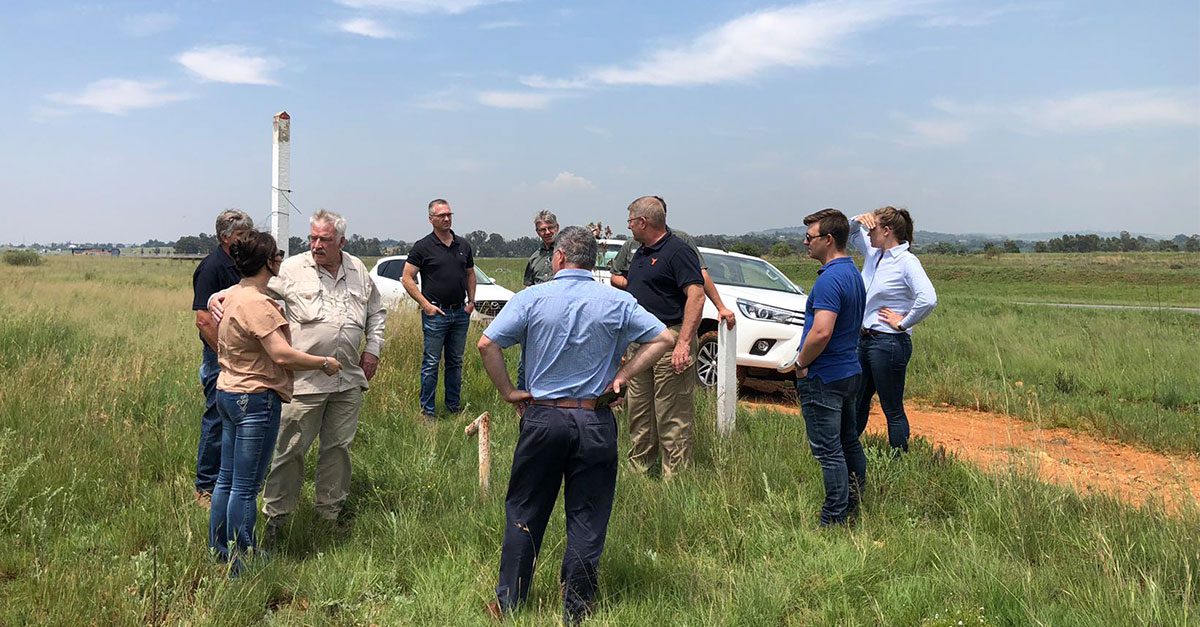
A large-scale PV project’s transition from construction to operations is one of the busiest, highest-stakes stretches of the entire project timeline. Stakeholders have to coordinate schedules, materials, trades, troubleshooting and testing while holding the line on design documents, contractual requirements and project milestones, all racing toward the commercial operations date (COD), the point at which the asset finally starts generating revenue.
That challenge isn’t new. Back in 2018, independent engineers Anastasios Hionis and Mat Taylor wrote an influential piece for SolarPro magazine, “Achieving Commercial Operations in Large-Scale PV Power Systems,” distilling lessons learned from steering utility-scale solar projects to COD: some of them smooth, some of them “unmitigated disasters” that left every stakeholder frustrated and financially exposed. Their core message still holds up: a collaborative, transparent performance-evaluation process gets high-value energy assets across the finish line far faster than an antagonistic one.
What has changed is almost everything around that process, and South African projects face a version of it with its own local wrinkles. The interconnection rulebook has been rewritten, the wiring code has moved through fresh amendments, NERSA and the local distributors have tightened up registration requirements, and most commercial-scale projects now pair PV with battery storage to firm up supply against grid constraints, which means COD is no longer a single test, it’s two. Here’s how to apply that original playbook to a 2026 South African project.
What Is the Commercial Operations Date (COD), Really?
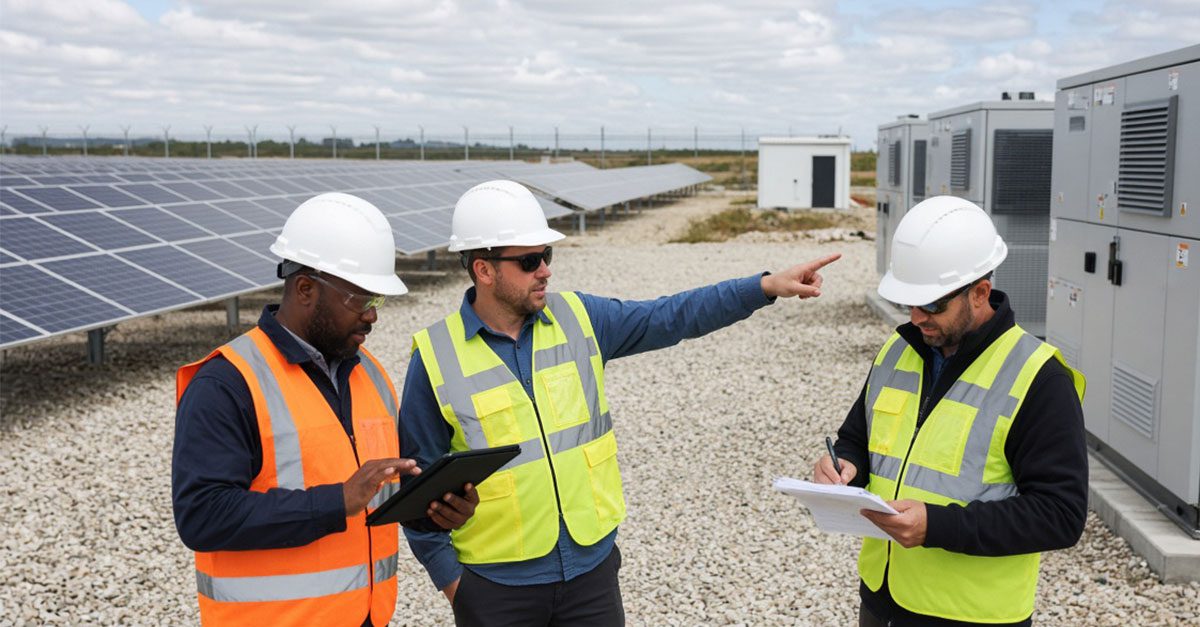
The commercial operations date is the contractually defined moment a PV (or PV-plus-storage) plant has demonstrated it performs as promised and is cleared to start generating revenue. Getting there requires the EPC, owner, financier, SCADA integrator, inverter vendor and independent engineer to agree, usually under time pressure, that the plant was built correctly, is wired and mapped correctly, complies with the local network service provider’s connection requirements, and produces the energy yield the contract promised.
The mechanism for proving that is performance testing: benchmarking system capacity, efficiency (performance ratio) and energy yield against a set of contractually mandated targets. Done well, it’s a fast, evidence-based process that also produces the operations team’s baseline data. Done poorly, with unrealistic expectations, proprietary “black box” models, or one-sided contract terms that require chronic overperformance just to pass, it becomes exactly the kind of conference-table (or courtroom) standoff the original article warned about, made worse in South Africa by long lead times for NERSA registration and Eskom or municipal sign-off if those approvals weren’t lined up early.
The Critical Negotiations: Get These Agreements in Writing Early
The 2018 article’s central recommendation remains the single best piece of advice in this space: settle testing methodology, risk allocation and definitions at project inception, not during the sprint to COD. A handful of topics come up on nearly every project and should be nailed down early.
Build One Testing Model Everyone Agrees On
The performance test needs its own energy model, related to but distinct from the annual energy model, tuned to reflect actual conditions at the time of testing. It has to be dynamic enough to adapt as design, implementation and site conditions change, and the contract language should drive the modeling assumptions rather than the other way around.
Don’t Pretend Measurement Uncertainty Doesn’t Exist
Every operational measurement carries uncertainty. Ignoring it, or assuming it always favors the owner, is inequitable. A 2% measurement-uncertainty allowance is a reasonable starting point, to be refined once equipment and the test plan are finalized.
Assign Module Power-Tolerance Risk to Whoever Controls It
Whichever party procures the modules should own the risk tied to nameplate power tolerance, since that party controls how much positive power tolerance gets backstopped.
Build In a Real Soiling Allowance
Zero-percent soiling is a myth, especially over a multi-day or multi-week test window, and especially on sites in the Northern Cape, Free State or other dry, dusty regions where wind-blown dust and agricultural activity can soil an array meaningfully between wash cycles. Contracts need either direct soiling measurement at test time or a documented estimate based on the wash cycle, and it should be assessed before testing starts, not argued about after a shortfall.
Use Open, Standards-Based Test Methods
Keeping methods and evaluation tools proprietary doesn’t protect anyone; it just slows troubleshooting when a test result comes in low. An open-book approach, where every at-risk party can review the assumptions, inputs and formulas, resolves disputes faster and builds trust across the closeout team.
Test Preparation: From Pre-commissioning to Sign-Off
Planning starts with a clear-eyed read of the contract and performance-test requirements, since that’s what determines SCADA specifications, sensor placement and documentation strategy long before crews are on site, the same planning that determines whether the commercial operations date holds.
- Pre-commissioning. Assemble the full closeout team, generate the testing documents, build a testing model separate from the annual model, confirm the network service provider’s (Eskom or the relevant municipality’s) connection requirements have been met, and verify the SCADA and sensor installation plans against the applicable test standard.
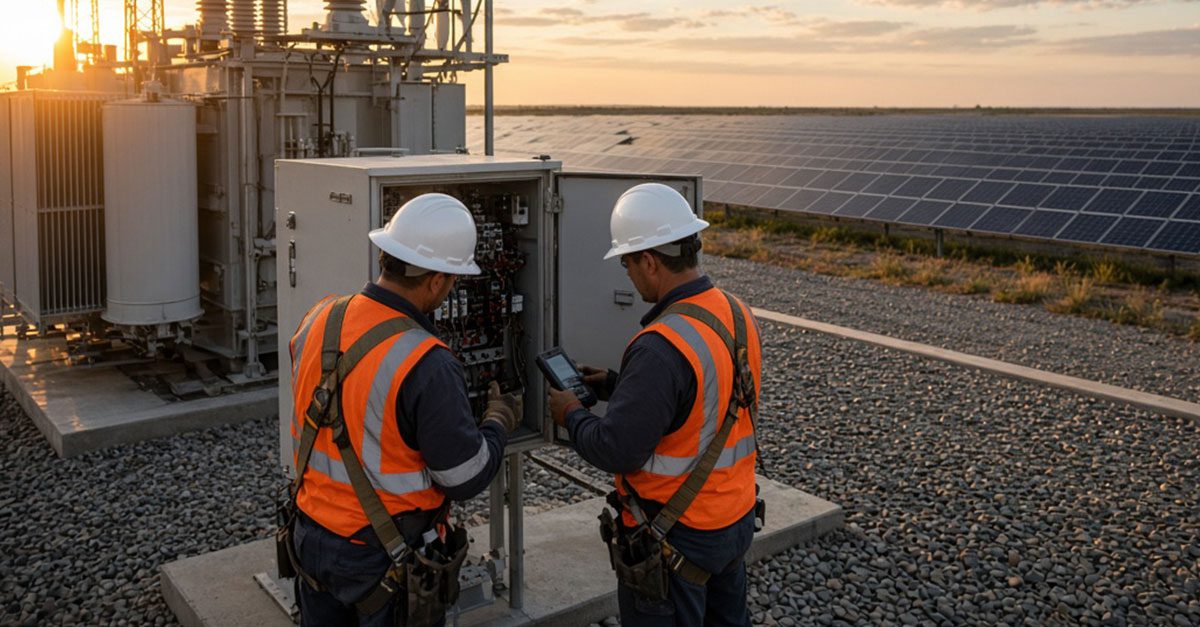
- Start-up and commissioning. Commission and validate SCADA and sensor accuracy, troubleshoot inverters and field wiring, close out punch-list items, confirm protection settings match the approved grid interconnection application, and run practice tests before the clock starts on the real one.
- Performance testing. Run the test, disseminate data in real time, compare evaluations, and determine results. Given reasonable weather and a transparent process, the outcome should be unambiguous: pass, or a clearly identified reason for failure.
A pre-populated commissioning folder (contracts, the testing model, the technical standard, combiner-box as-builts, calibration certificates, SCADA log-in credentials, the NERSA registration or licence documentation, and the permission-to-operate paperwork from the local network service provider) turns project closeout from a fire drill into a checklist.
Sensors and SCADA: Where Good Projects Still Go Wrong
Reliable, accurate measurement of primary data (irradiance, power, temperature) is what performance assessment stands or falls on, whether the plant is being tested or already operating.
Irradiance Sensors
Pyranometer misalignment is still the most common cause of a plant appearing to underperform when it isn’t. A plane-of-array (POA) sensor that isn’t mounted at the array’s actual tilt, or a global horizontal irradiance (GHI) sensor whose bubble level isn’t centered, will quietly skew results. On single-axis trackers, checking that POA and GHI readings converge at solar noon is a fast sanity check on tracker angle, sensor installation and SCADA scaling all at once.
Power Measurements
Utility meters, check meters and inverter output data aren’t automatically accurate. Understand each meter’s accuracy spec and roll-up method before test day, not while the clock is running, and confirm the meter configuration matches what the network service provider signed off on for billing and export purposes.
Temperature Sensors
Ambient temperature sensors tend to be reliable if installed correctly. Back-of-module (BOM) measurements are a poorer proxy for the array as a whole, and thermal-loss models built on BOM data still aren’t mature enough for evaluations where a tenth of a percent can be worth a substantial sum in lost revenue, a caution that remains just as true today, particularly at the high ambient temperatures common across much of the South African interior.

Documentation: The Closeout Package That Protects the Asset
A standards-based performance-test package is effectively the factory acceptance certificate for a fielded PV plant. Owners, asset managers and future buyers will lean on it for years, and incomplete documentation is consistently the difference between a smooth transaction and a discounted one. At minimum, the closeout folder should include the contracts and addenda governing the test, the testing model and all assumptions, the applicable technical standards, combiner-box as-builts, inverter and string mapping, calibration certificates, SCADA credentials, the electrical Certificate of Compliance (CoC) confirming the installation meets SANS 10142-1, and the NERSA registration and network service provider’s permission-to-operate documentation, the paperwork every commercial operations date ultimately rests on.
Battery Energy Storage: The Parallel Path to Commercial Operations
The single biggest structural change since 2018, and one felt especially keenly in South Africa given ongoing grid constraints and the appetite for dispatchable, firm capacity, is that a large share of commercial and utility-scale projects reaching their commercial operations date today aren’t PV-only. They’re hybrid. Adding a battery energy storage system (BESS) doesn’t just add hardware; it adds an entire second commissioning track that has to be planned, scheduled and closed out alongside the PV performance test, not bolted on afterward.
Factory and Site Acceptance Testing (FAT/SAT)
Where PV commissioning leans on performance testing, battery commissioning leans on factory acceptance testing (FAT) at the manufacturer and site acceptance testing (SAT) once racks are installed and energized. FAT confirms the system was built and configured correctly before it ever ships, which matters more on projects importing containerised BESS units into South Africa, where a defect caught on the factory floor is far cheaper to fix than one caught after a lengthy sea freight. SAT confirms the system survived transport and integration intact and communicates properly with the site’s SCADA and protection systems. Our breakdown of FAT and SAT procedures for battery systems walks through the specific checkpoints (cell balancing, insulation resistance, communication protocol verification and thermal management checks) that both tests need to cover.
Capacity and Round-Trip Efficiency Verification
Just as a PV plant’s performance test benchmarks capacity and yield against contractual targets, a BESS needs its own acceptance test benchmarking usable capacity, round-trip efficiency and response time against the specification the owner is paying for. These figures degrade over time even under normal operation, so the acceptance test also becomes the baseline every future degradation and warranty claim gets measured against, which makes accurate, well-documented baseline testing at COD just as valuable for storage as it is for the PV array, and gives an owner a defensible number when the battery is being cycled hard to manage time-of-use tariffs or grid instability.
Safety Certification: IEC 62619, IEC 63056 and Local Compliance
Battery systems carry a safety-certification burden that PV modules generally don’t. South African installations most commonly reference the IEC family of standards rather than the UL suite used in North America: IEC 62619 covers safety requirements for lithium-ion cells and batteries in industrial applications, IEC 63056 addresses secondary lithium cells and batteries for use in electrical energy storage systems, and IEC 62933 series standards cover the wider electrical energy storage system. See how MEGATRON’s commercial ESS racks and systems are certified to the relevant international standards: documentation the closeout team should have in hand well before the performance-test window, since a missing certificate can stall COD even after the batteries themselves pass every functional test, and can also complicate the fire and insurance sign-off that South African municipalities increasingly ask for on containerised BESS installations.
BMS Integration and Continuous Monitoring
A battery management system (BMS) is doing, for the storage asset, roughly what SCADA and irradiance sensors do for the PV array: providing the cell-level voltage, temperature and state-of-charge data that both proves the system is healthy at COD and protects it in operation afterward. That data needs to be mapped into the same central, transparent data repository recommended for PV performance testing, not siloed in a separate vendor portal, so the same closeout team troubleshooting an inverter can just as easily troubleshoot a battery rack, and so the operations team has a single source of truth during load-shedding-driven cycling.
Aligning the Two Commissioning Tracks
The practical takeaway is scheduling. Battery FAT typically happens off-site, months before mechanical completion, often at a factory overseas, while SAT and capacity testing need to land inside the same closeout window as the PV performance test. Building both tracks into a single master schedule, with a tiger team that includes storage-specific expertise from day one, is what keeps a hybrid project’s COD from getting held up by whichever system happens to test second, or by customs and logistics delays on imported battery equipment.
What’s Changed for South African Projects: Updating COD for Today’s Market
The fundamentals above haven’t aged. The regulatory and technical landscape around them has moved substantially, though, and a 2026 South African closeout team needs to account for several developments.
Grid Interconnection Now Runs Through NRS 097-2-1:2024
The small-scale embedded generation (SSEG) interconnection standard has been updated to NRS 097-2-1:2024, which tightened protection, ride-through and reporting requirements for generation connected to the distribution network. Eskom’s SSEG connection process and equivalent municipal processes (Cape Town’s, for example, sets out its own requirements in a Technical Standard for the Interconnection of Embedded Generation) should be checked against the current revision, not an older baseline, since protection settings validated during commissioning need to match what was actually approved.
The Wiring Code Has Moved Through Further Amendments
SANS 10142-1, the wiring code that governs how a PV and BESS installation is documented and certified, has continued to be revised, with edition 3.2 released in 2024 and further amendments since. The electrical Certificate of Compliance issued at COD needs to reference the edition actually in force at the time of testing, and any DC or storage-specific requirements added in the newer editions should be checked against older contract language written before those changes existed.
NERSA Registration and Licensing Timelines Matter
Depending on capacity, a project needs to be registered with or licensed by the National Energy Regulator of South Africa (NERSA) before it can legally generate and, where applicable, sell power. Registration and licensing timelines don’t always move at the same pace as construction, so building NERSA’s process into the master schedule, rather than treating it as a formality to chase once the plant is mechanically complete, protects the COD date from a purely administrative delay.
For teams juggling several projects at once, that master schedule is increasingly managed with AI-assisted tools instead of a spreadsheet. Document-management platforms with OCR and natural-language processing can flag which sites have outstanding NERSA registration submissions, cross-check licence and permit expiry dates against the construction timeline, and surface the specific administrative step about to become the critical path — before it forces a COD slip. The same analytics layer is showing up on the performance-testing side: machine-learning models trained on SCADA and sensor data can catch pyranometer drift, inverter curtailment, or other measurement anomalies faster than a manual review of the raw logs, flagging the kind of instrumentation error that would otherwise look like an unexplained shortfall against the guaranteed energy yield.
The International Test Standards Themselves Have Been Revised
ASTM’s performance-test standard, cited in 2018 as E2848-13, has since been reapproved as ASTM E2848-13(2023), and remains a widely referenced methodology on South African utility-scale contracts even though it’s a US standard. IEC’s monitoring standard has gone further: IEC 61724-1:2021 is now a full second edition, with updated data-quality and monitoring-system requirements that closeout teams should be testing against rather than the first edition referenced in older contracts. Sandia’s PV Performance Modeling Collaborative remains a solid, vendor-neutral reference for the modeling assumptions behind any testing model.
Drones and Remote Diagnostics Now Do Work Handheld Tools Used To
Aerial thermography and automated IV-curve tracing have gone from novelty to standard practice for locating underperforming strings and modules across large arrays in a fraction of the time handheld tools require, which shortens the troubleshooting cycle that used to eat into the run-up to a performance test, an especially useful time saving on the large, remote sites common in the Northern Cape and Free State (see this overview of drone-based thermal inspection).
1500V Architectures and Bifacial Modules Change the Performance Model
1500V DC architecture is now the utility-scale default on South African projects, changing string counts, combiner-box design and balance-of-system cost assumptions that feed the testing model (background on the evolution of 1500V plant architecture). Bifacial modules have followed a similar path from niche to mainstream, and South Africa’s high-albedo sites, light-coloured soils, gravel and sand in particular, tend to reward rear-side gain more than many other markets, which means testing models now need to account for it using frameworks like those documented by Sandia’s bifacial characterization and rating work, a variable that simply didn’t exist in most 2018-era testing models.
Strategies for a Smoother Path to the Commercial Operations Date
Updated for today’s South African projects, the closing recommendations from the original article still frame the right approach:
- Say no to secrets. An open, transparent testing and closeout process finds solutions faster than a proprietary one, full stop.
- Centralize data. One repository, accessible to every at-risk party, should contain everything a completely uninformed third party would need to validate the test from scratch.
- Establish a tiger team. Assemble owner, EPC, SCADA, inverter, storage and independent-engineering representatives at project inception, and keep membership continuous through COD.
- Keep a backup squad ready. Projects approaching COD can’t afford to wait for a vendor to assemble an ad hoc troubleshooting team; have engineers and field personnel on call for the performance-test window.
- Plan the storage track separately, in parallel. Don’t let battery FAT/SAT and safety certification become the item that stalls an otherwise-passing PV performance test.
- Start the regulatory clock early. Line up NERSA registration or licensing and the network service provider’s connection approval well before the performance-test window, so administrative timelines never become the reason a technically ready plant misses its COD.
Frequently Asked Questions
What is the commercial operations date (COD) for a solar project in South Africa?
COD is the contractually defined date on which a PV or PV-plus-storage plant has passed performance testing, met the network service provider’s interconnection requirements, and is cleared to begin generating revenue for its owner. It marks the transition from construction to operations.
How long does PV performance testing take?
It varies by contract and system size, but most utility-scale performance tests run from several days to a few weeks, since the testing model needs enough data points, under acceptable weather and soiling conditions, to produce a statistically defensible result.
What’s different about COD for a solar-plus-storage project?
Hybrid projects effectively run two commissioning tracks in parallel: the PV performance test described above, plus battery factory acceptance testing (FAT), site acceptance testing (SAT), round-trip efficiency verification and safety certification against the relevant IEC standards for the storage system. Both have to close out, alongside NERSA registration and network service provider sign-off, before the full asset reaches COD.
Final Thoughts
The technology, the codes and the standards have all moved on since 2018, but the underlying lesson from the original SolarPro article hasn’t: projects that treat performance testing as a shared, transparent problem-solving exercise reach their commercial operations date faster and with far less financial risk than projects that treat it as a contractual weapon. Build the tiger team early, agree on the testing model and risk allocation before ground is even broken, start the NERSA and network service provider approvals well ahead of the test window, and plan for storage as its own commissioning track rather than an afterthought, and COD becomes a milestone to hit, not a standoff to survive.
Whether you’re bringing a commercial rooftop array or a utility-scale ground-mount PV-plus-storage plant to commercial operations, Symtech Solar’s EPC team can help you plan a closeout process built around South Africa’s codes, standards and hybrid-system requirements. Symtech Solar maintains a dedicated South Africa office, so local projects get a closeout team that already knows NERSA, Eskom and municipal requirements firsthand rather than learning them on the fly.
Symtech Solar South Africa
207 Elston Avenue, Benoni, South Africa
Ray Richardson
(+27) 82-322-6195
[email protected]